The Sandbank
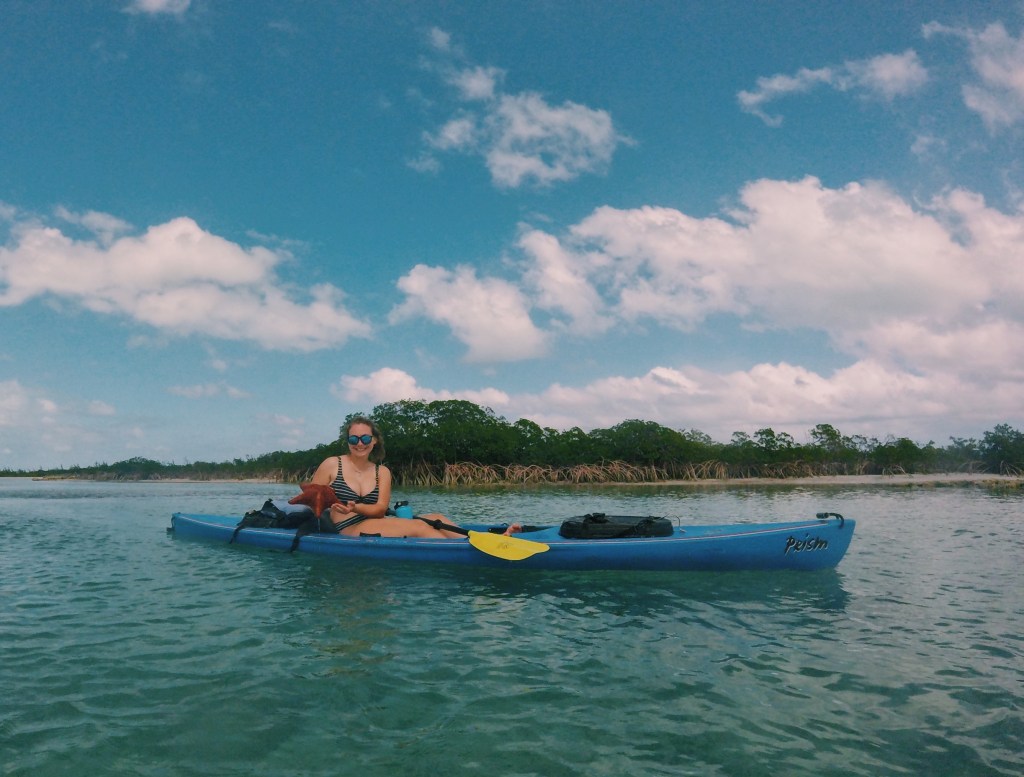
Rolling over in bed I was startled awake by a bright ray of light shining directly on my eyes. The blazing sun was a sign that the streak of bad weather we had been having must have cleared up. Who knew it rained so much in the Bahamas! When you think of a vacation in the Bahamas, you immediately picture a white and blue bungalow on the beach with jet skis and hammocks. However, I was not staying in some hoity-toity resort; where I was, you did not turn the cabin light on at night in fear that you’d be greeted by the locals. And by locals, I mean the two-inch-long cockroaches! I had been staying at Forfar field station on Andros island for three weeks, participating in their 5-week educational program. Back at home, I was starting to get stir crazy due to the pandemic. It was crucial for me to get out of the house and leave New England’s winter, so rather spontaneously I applied for this course, and flew to Andros Island. Andros is the largest island in the Bahamas archipelago, but most of the land is part of the national park, so it happens to be the least populated. I was spending a month of my gap year here studying marine biology and adding to my collection of scuba certifications. So far we had barely been on the water because of the seemingly endless storm and instead were stuck in the classroom. The nice weather was not about to escape me without taking advantage of it.
I threw on my bathing suit and shuffled through the sand to the main cabin for some scrambled tofu. There was still a bit of wind; the sand whipped at my ankles making them burn with each step. The wind meant that our lab, measuring populations of coral, was canceled since we wouldn’t have good visibility in the water. Instead, we could go off and explore the island as long as we were back in time for our mid-term. Even though there wouldn’t be any school credit for this course, I still couldn’t shake my testing anxiety. It would have been natural to prepare all day for the exam, but I knew there would be plenty of studying in my future. Time for me to step outside my comfort zone. My roommate, Sarah, had already made plans for her day, and I decided to tag along. So, we, with our friend Ryan, got three kayaks and prepared ourselves for what I thought would be a nice casual paddle. They were planning on kayaking a few miles, and unknowingly, I was along for quite a journey.
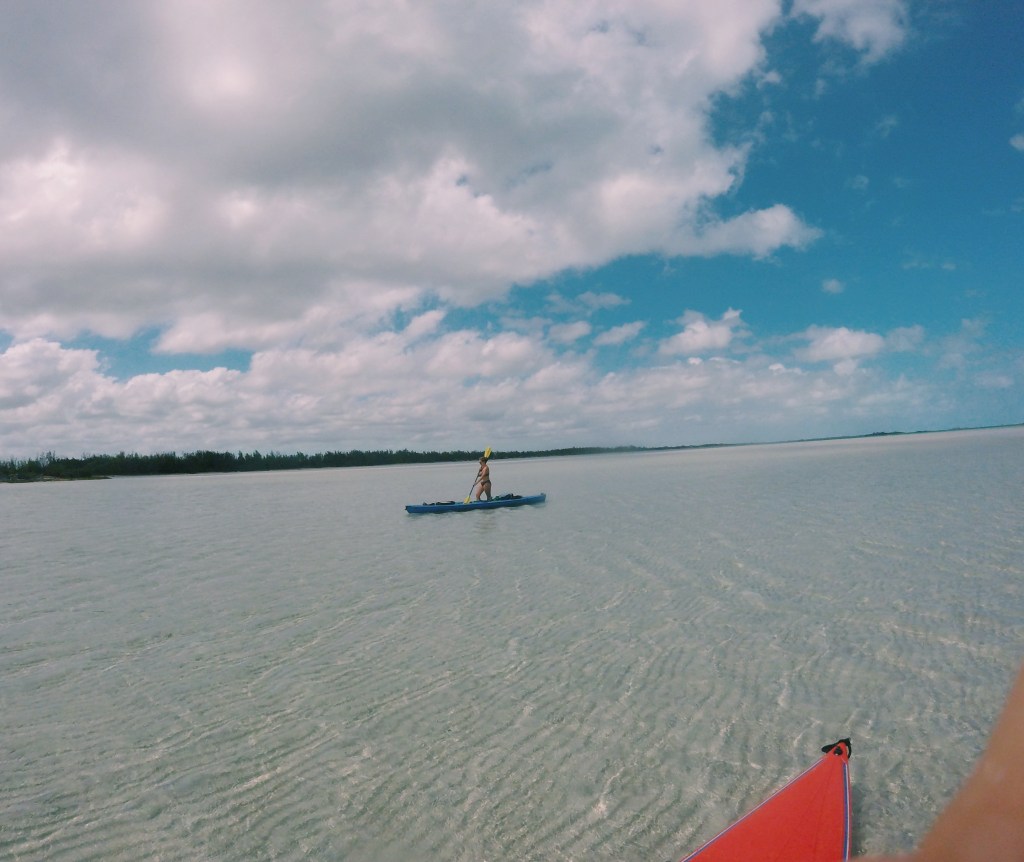
My weak arms could not keep up with the opposing winds. I always thought of myself as a strong kayaker, but compared to Sarah and Ryan, I was no Popeye (even with the amounts of spinach I was consuming). We paddled on and on, keeping the Eastern shore of Andros on our right, which consisted mostly of sand flats and mangrove ecosystems, and the open ocean on our left. I had come to this program to spend more time under the surface, where the only sound was my own thoughts. I find it rather peaceful deep down until my anxiety creeps in, and realize exactly how much pressure there is, keeping me 120 feet under. It felt like a nice contrast to instead be gliding along the surface, looking at the underwater world from a different angle.
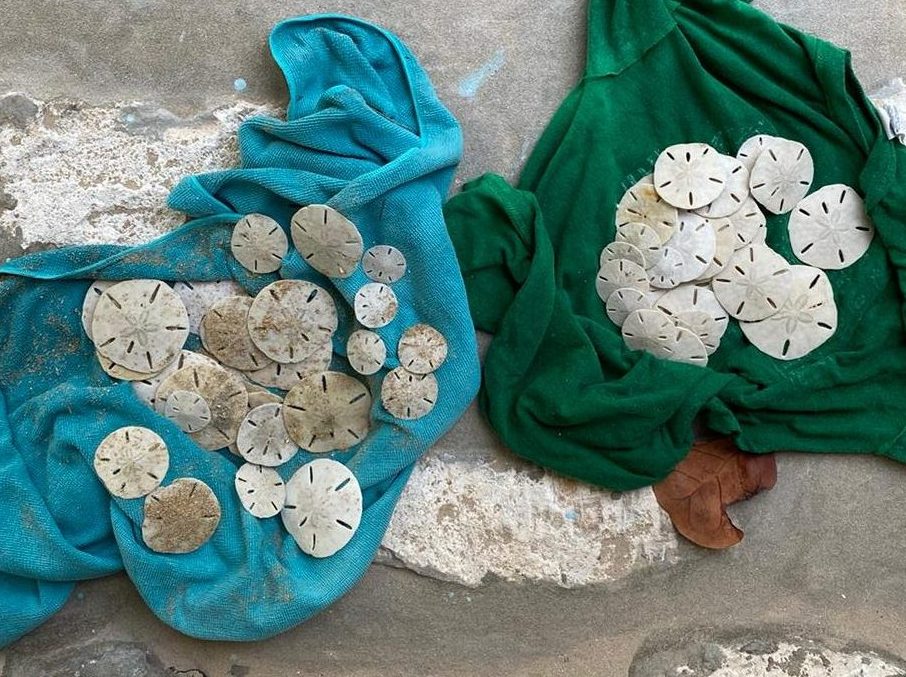
After about two hours of rowing, Sarah and Ryan beached their kayaks on a sandbar and frantically started picking unknown objects up from the sand. Unsure of why they were so frenzied, I got excited and quickly met up with them. I felt the sand crunch beneath my feet and bent down to pick up a piece of broken sand dollar. Brushing off the goopy sand from the half in my hand, I traced my finger along the delicate flower figure on the top of the rough sandpaper skeleton. The entire sandbank was filled with thousands of these milky white sand dollars, and I ran around collecting every one in my sight. (Little did I know that I would go to pack the sand dollars so poorly, that all I am left with today is the memory and a jar of sand dollar ashes. It’s almost as if they lost their magic as they were taken back to a more monotonous life.)
I had never seen anything like this, and while I was ecstatic, there was a sense of tragedy as all these sand dollars were dead. The bleached white color indicated that most likely the water was too hot for them to survive. We had learned about sand dollars the week prior; if they were healthy they would be dark brown and fuzzy. Still, I darted around digging through the sand pulling out each piece of my buried treasure. They ranged in size, some as big as my fist and others as small as a button. If anyone would have seen us, they would have thought we were three kids on the loose in a candy store, and we were determined to clean out the whole place! This was the moment my soul needed. After a rough year in the pandemic, the inner child in me came out, and I could finally release all the tension that had built up inside.
Once our kayaks were filled, we looked ahead and saw a turquoise channel heading to the right, into the main body of Andros. There was a smaller peninsula on the left of the channel, which protected the inlet from wind and harsh waves. The right side of the channel consisted of green bushy mangroves that were growing half in the shallow water and half on the limestone-covered land. Mangrove species are crucial for the survival of tropical ecosystems as they protect the land from large waves and erosion, serve as a fish nursery, and filter the water for pollutants. The peninsula on the left was part of the main island where it was only attached by one tiny strip of land farther south, and it looked starkly different from the luscious greenery to my right. The area was covered in pristine caramel beaches that looked like they had never been discovered before.
Right away, as we paddled through the passageway, the blue-tinted sandy bottom morphed into various shades of orange and purple Caribbean Sea stars. The vibrant and prickly starfish were a sharp contrast with the silky picturesque sand bottom. I paddled to a shallower area and picked up a burgundy sea star and watched it suction its tiny arms to my hand. Sea stars are very peculiar animals, as they do not have a brain controlling their movements, and they have the ability to regenerate their limbs. After a moment of watching it wriggle around, I gently pulled it off my body as it tried to hold on with its tentacle-like arms, and placed it back in its spot.
Continuing to paddle through the crystal blue channel, I kept my eye down under my kayak to see if anything passed beneath me. Because the peninsula was protecting this inlet, the water was as smooth as glass and any movement would be easy to detect. Before long a grey blob gilded under me; it was a large southern stingray! The ray was about 3 feet wide and was peacefully drifting with the tide, similar to how a bird coasts in the sky. Stingrays have gotten a bad rap ever since Steve Irwin’s death, but they are not naturally aggressive creatures and very rarely attack humans (I have actually kissed a stingray on the nose before). Although I was interested in getting a closer look at the ray, it was not so thrilled with me and it left some sand floating in its wake as it darted away.
When we saw some houses on the beachy peninsula, we realized we had traveled four miles to the Kamalame resort (a fancy resort rumored to house various personalities, including Oprah!). We decided to turn around because our midterm was in only two hours. Unknowingly, we had been kayaking for three hours and were definitely pushing our luck. But at that moment I felt like this experience would stick with me more than some silly exam. Immersed in nature, with people I cared for and no other thoughts about what had to be done outside of that kayak, gave me the moment I needed to clear my head. Looking back at it now, maybe I should have spent a little more time studying, but I was on this trip for the experience and you couldn’t put a grade on that.
Before leaving the channel all three of us stopped abruptly; we had found ourselves in the middle of a group of Hawksbill turtles. These critically endangered sea turtles get their name from the shape of their mouth and have some of the most detailed shells. They are the most endangered sea turtles out of all 7 species and it is thought that there are only 8,000 nesting females left in the world. We watched as they whipped through the water and some even propelled themselves up and leaped through the air. I sat amazed staring at this once-in-a-lifetime sight unfolding before my eyes. At this moment, I was truly at peace.
In that instant, all I could do was appreciate the place I was in and the people with me. The mid-term ended up being postponed until later in the day, so we were able to fill everyone in on our adventure (and take a nap). I learned that sometimes you just have to get in the kayak and not ask questions because you never know where the current might take you. Had I known that we would kayak a total of eight miles I probably would not have gone and would have missed out on one of the happiest moments of my life. Now, as I sit here at my desk, picturing this happy place in my head, I can feel the warmth from the sun spreading through my veins and the saltwater beginning to glass over my eyes.
 The Reluctant Traveler
Sarah, this was so much fun to read and so interesting! Also, so well-written! You really have a great writing-voice, pulling the reader in. I was so impressed by your strength, grit, stamina, and ability to turn something that sounded rather hard to do into something magical. Now I want to read more about your time on Andros! Love, Vivienne
LikeLike